Fifty Conversations First: CSIRO Data61 case study
CSIRO's Data61 · Applied research
Research was the product decision. Not a warm-up to it.
CSIRO's Data61 wanted trustworthy climate data in the hands of the people who shape policy. Before anyone drew an interface, I ran fifty in-depth conversations with the policymakers who'd have to trust it, and let what they told me set the direction.
Fifty conversations, clustered into four recurring themes.
The tension
The data was trustworthy. Getting to it wasn't.
CSIRO holds some of the most trusted climate data in the country. The people who needed it most (policymakers weighing decisions with real consequences) weren't reaching for it. The science was sound. The way in wasn't.
An LLM interface could close that gap: a plain-language question, an answer grounded in real science. But an interface like that is only ever as trustworthy as what sits beneath it. Guess wrong about how policymakers actually work, and you've built a fast, confident way to send them the wrong way.
So the first decision came before any design work: guess, or go and ask.
The work
Fifty conversations, then a direction.
Fifty policymakers. One conversation at a time. Each one an account of how climate data moves through their work: where they trust it, where they route around it, where a single number tips a decision.
Fifty voices is a lot to hold. The job was making them usable: use cases, personas, and stakeholder maps that turned what I heard into a direction three agencies could read, challenge, and stand behind.
Fifty in-depth interviews with policymakers who work with climate data, depth over reach, one conversation at a time. The evidence base, gathered before any interface was drawn.
Fifty voices became use cases, personas and stakeholder maps. The personas were role-based archetypes, grounded in the interviews and never in names.
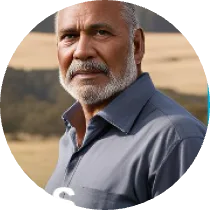 FacilitatorFederal policy adviser
 Knowledge brokerEnvironmental law consultant
 ProviderSenior policy officer
The artefacts gave three agencies a direction they could read, challenge and back. This is where research became the product decision rather than a preamble to it.
That direction shaped an LLM interface for climate data, built with the Bureau of Meteorology and the Department of Agriculture, and fed into My Climate View, the live tool I assisted with.
The payoff
The research moved the room.
Put in front of key stakeholders, the insights shifted the numbers. Project support rose +45% across three agencies. The evidence also aligned the people who had to fund the work and back it.
From there, the research shaped an LLM interface for climate data, built with the Bureau of Meteorology and the Department of Agriculture, and fed into My Climate View (opens in a new tab), the live tool I assisted with.
The interface, working
What the research shipped.
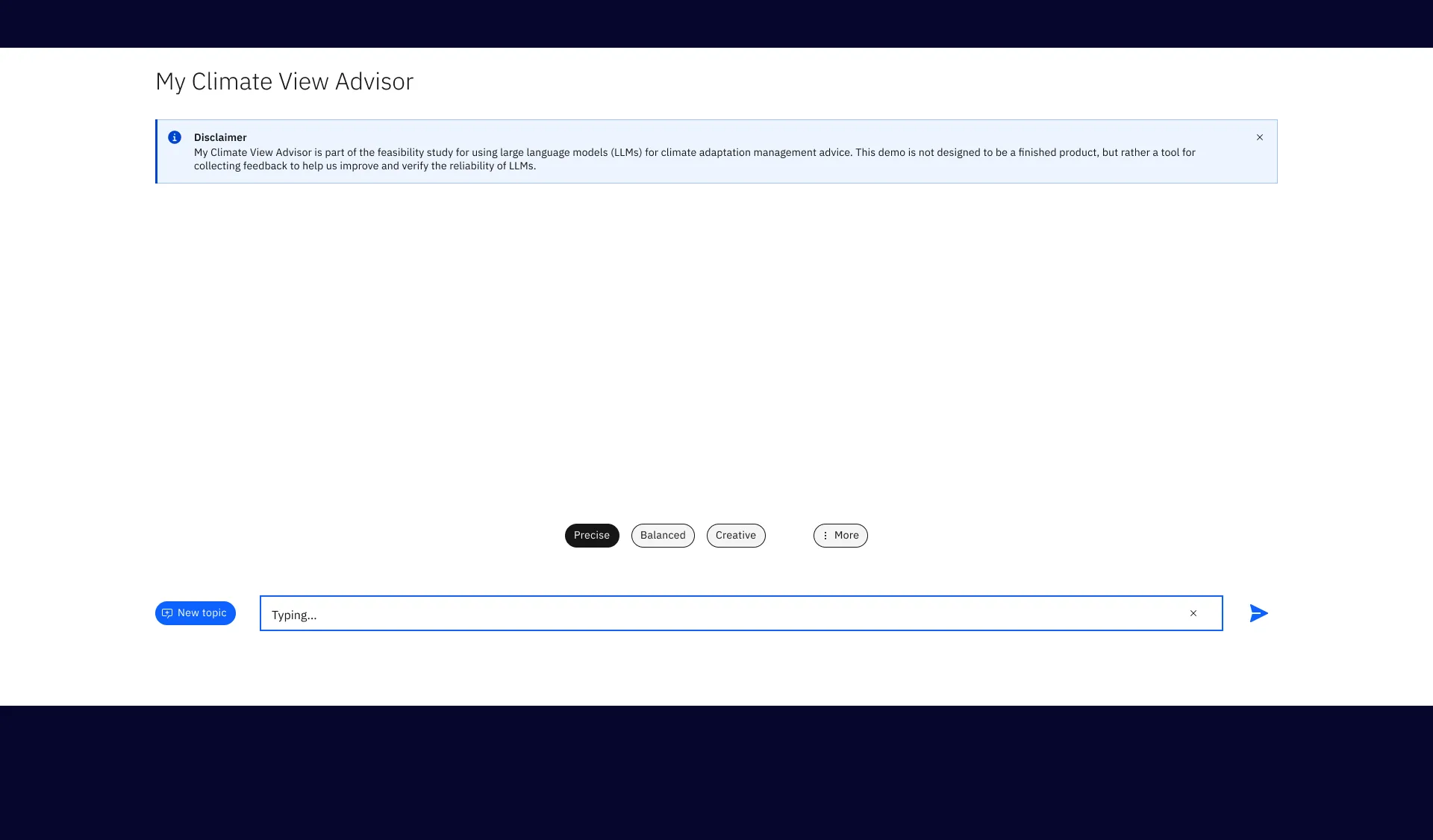
The LLM interface I helped shape for climate data, moving through its real states, from prompt to grounded answer.
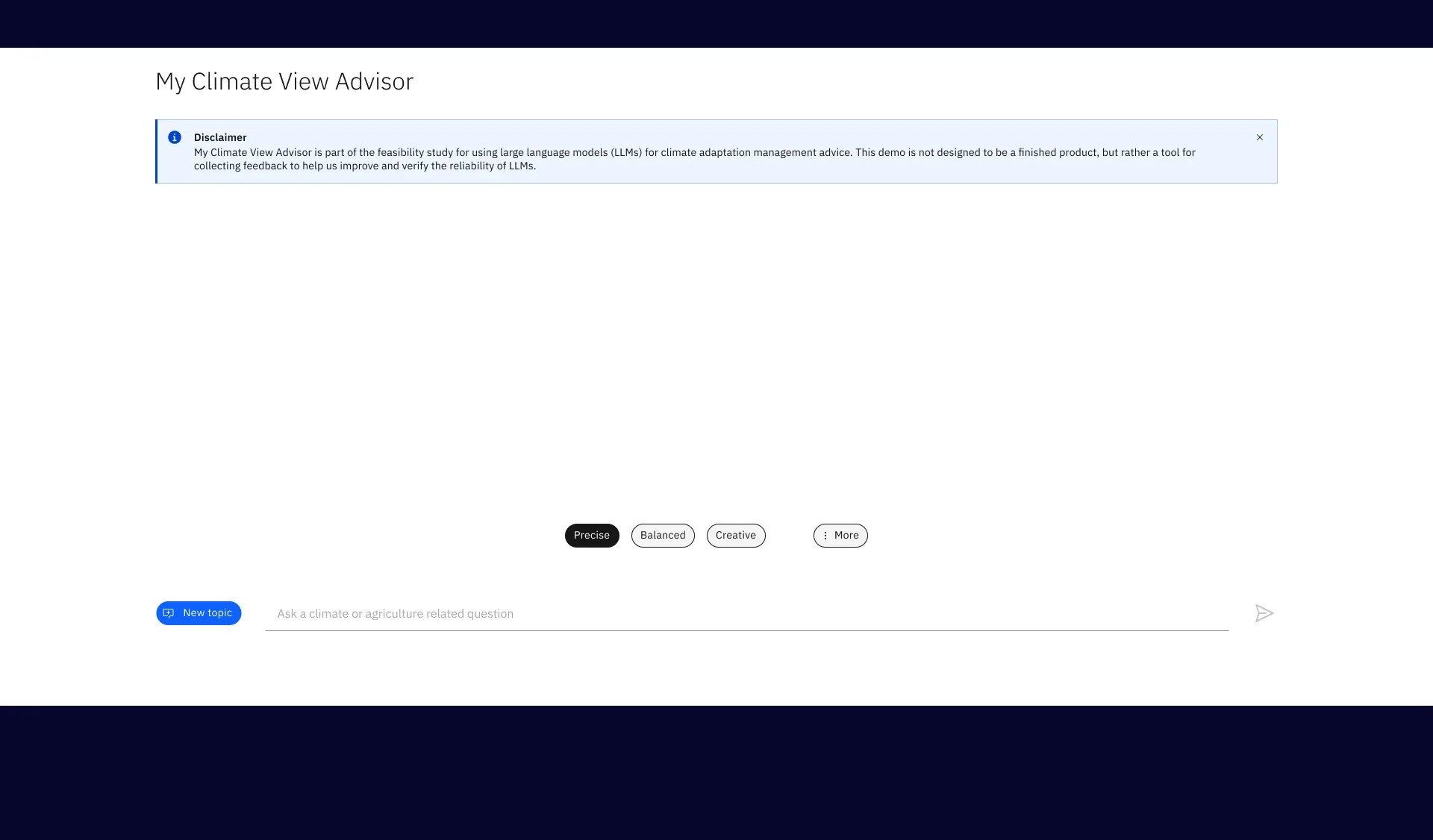
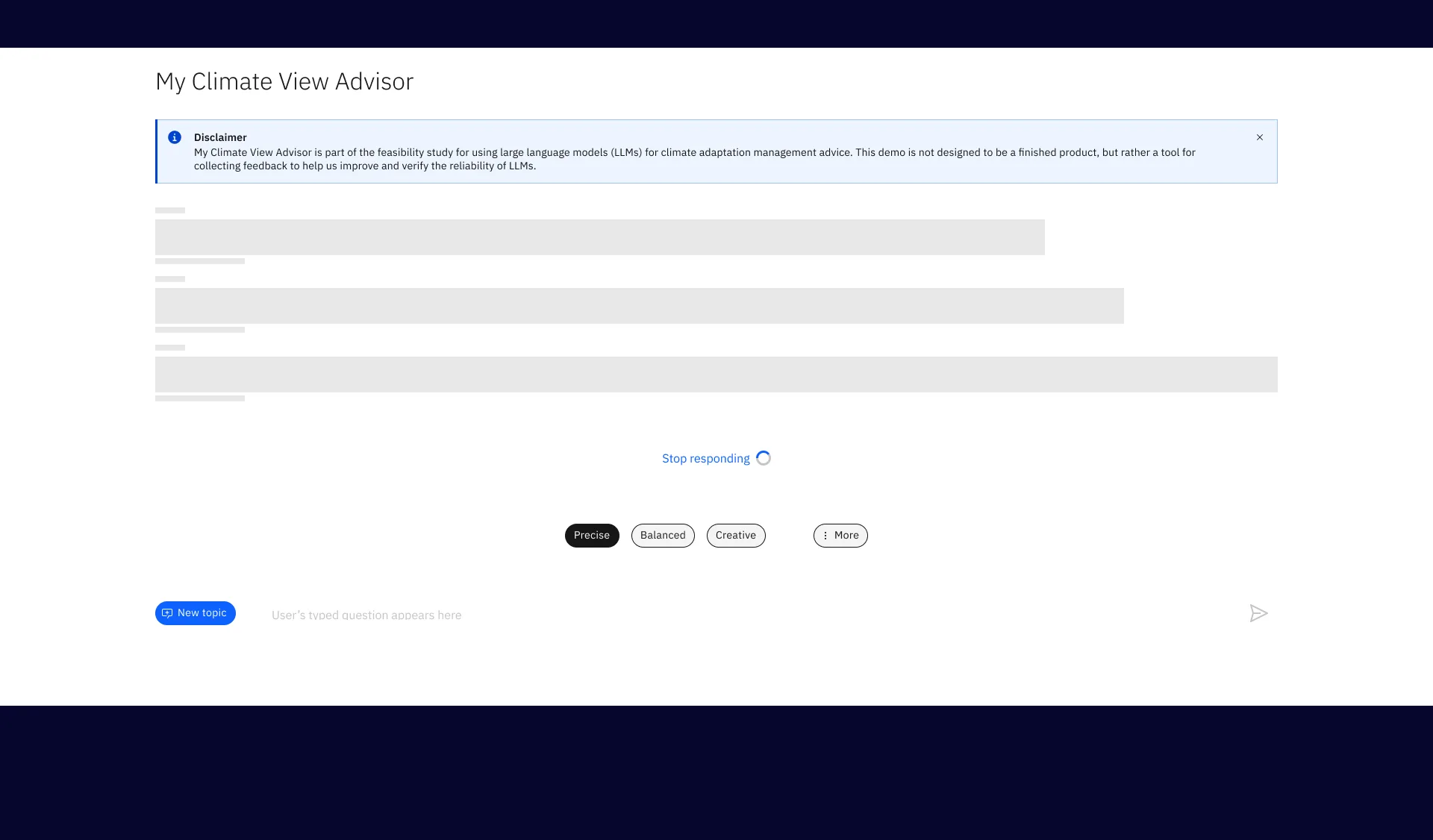
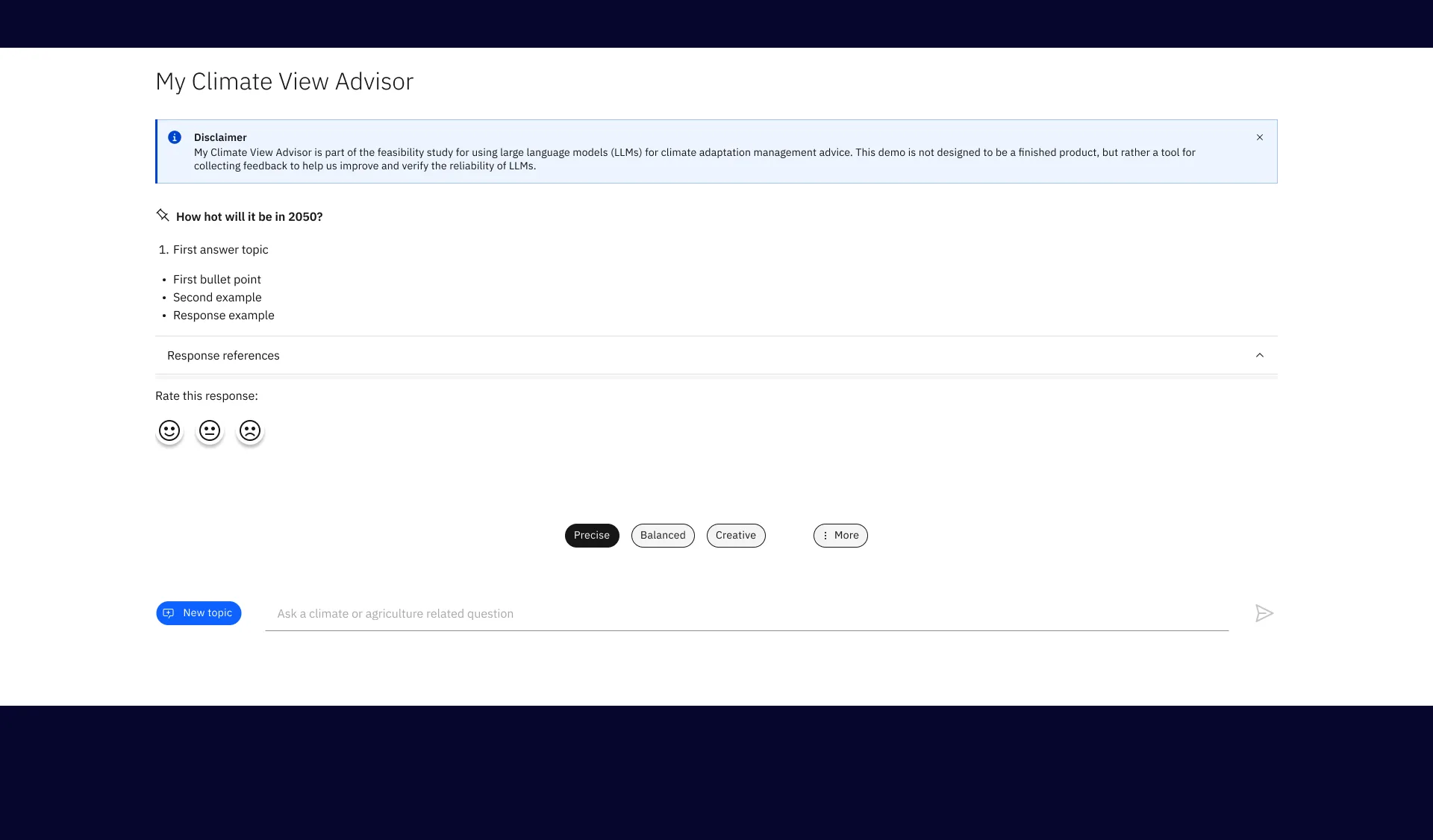
Default: a plain-language prompt, with the feasibility-study disclaimer up front. Trust starts by being honest about limits.
Typing: send only activates once there’s a question, and a clear control appears. Input stays low-stakes and reversible.
Generating: skeleton loading and a visible ‘Stop responding’. The wait is legible and the user keeps control.
Generated: the answer carries response references and a quick rating. Every reply invites scrutiny.
Who the research reached
Three agencies, one direction
The research gave three agencies a shared direction, and reached the policymakers it was built for. Hover or focus a node.
An LLM interface for climate data is only as trustworthy as the research behind it. I brought fifty policymakers' worth.
Still here? You're my kind of reader. The next case study's just below, or come say hello. I answer fast.